

Still Getting a Period in
Perimenopause?
Consider Mirena.
If you still have a period in perimenopause, birth control still matters
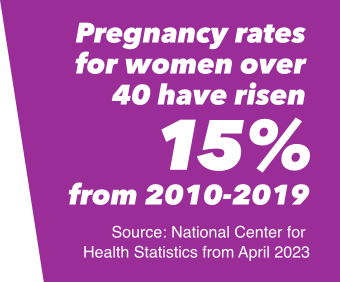
Having a period means pregnancy is still possible in perimenopause.
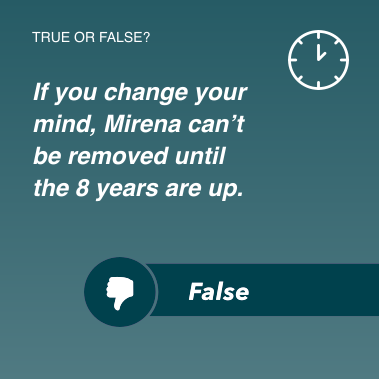
Mirena® gives you long-lasting contraception, and if your needs change, it can be removed at any time by your provider.

Millions of women have used Mirena.*
Ask your provider if it's an option for you.
*Supported by 2010-2025 SHS data.

Over 99% effective at preventing pregnancy for up to 8 years.

Take one thing off your daily list.
With Mirena, you will have to check for the threads once a month on your own.
Mirena is not right for everyone. Do not use Mirena if you:
- are or might be pregnant; Mirena cannot be used as an emergency contraceptive
- have a serious pelvic infection called pelvic inflammatory disease (PID) or have had PID in the past unless you have had a normal pregnancy after the infection went away
- have an untreated genital infection now
- have had a serious pelvic infection in the past 3 months after a pregnancy
- can get infections easily. For example, if you:
- have multiple sexual partners or your partner has multiple sexual partners
- have problems with your immune system
- use or abuse intravenous drugs
- have or suspect you might have cancer of the uterus or cervix
- have bleeding from the vagina that has not been explained
- have liver disease or a liver tumor
- have breast cancer or any other cancer that is sensitive to progestin (a female hormone), now or in the past
- have an intrauterine device in your uterus already
- have a condition of the uterus that changes the shape of the uterine cavity, such as large fibroid tumors
- are allergic to levonorgestrel, silicone, polyethylene, silica, barium sulfate, or iron oxide
See a full list of safety considerations about Mirena.
You don’t have to settle for heavy periods during perimenopause

Even in perimenopause, you have options.†
Mirena can treat heavy menstrual bleeding (HMB) for up to 5 years in women who choose it for birth control.
†Based on a study including women who had heavy periods for the past 2 to 3 cycles.
Mirena is highly effective at reducing heavy periods
In a Mirena clinical trial of women ages 18 and older with HMB, Mirena rapidly reduced heavy periods. The majority experienced:
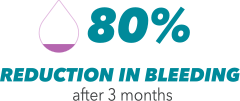
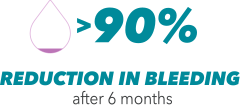
Bleeding and spotting may increase in the first 3 to 6 months and remain irregular.
Periods over time usually become shorter, lighter, or may stop. See how Mirena treats heavy periods.
Prepare for a conversation with your doctor about heavy periods
Fact check
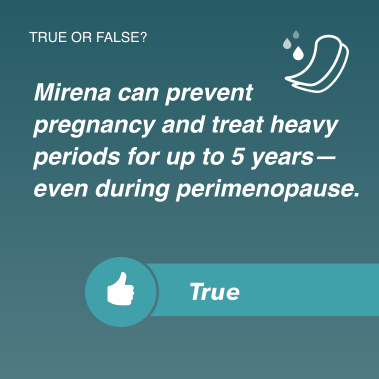
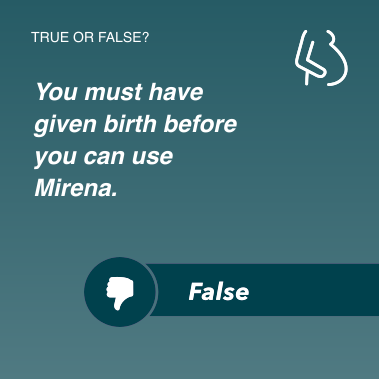
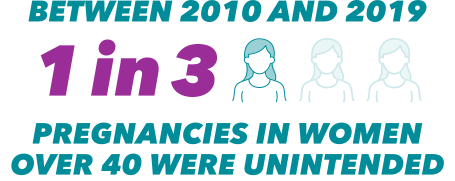
Source: National Center for Health Statistics from April 2023
Talk to your healthcare provider about Mirena
- Still getting a period?
- Want long‑term birth control?
- Prefer a low‑maintenance option?


INDICATIONS FOR MIRENA
Mirena® (levonorgestrel-releasing intrauterine system) is a hormone-releasing IUD that prevents pregnancy for up to 8 years. Mirena also treats heavy periods for up to 5 years in women who choose intrauterine contraception.
IMPORTANT SAFETY INFORMATION
- If you have a pelvic or genital infection, get infections easily, or have certain cancers, don't use Mirena. Less than 1% of users get a serious pelvic infection called pelvic inflammatory disease (PID).
- If you have persistent pelvic or stomach pain, or excessive bleeding after placement, tell your healthcare provider (HCP). If Mirena comes out, call your HCP and avoid intercourse or use non-hormonal back-up birth control (such as condoms or spermicide). Mirena may go into or through the wall of the uterus and cause other problems.
-
Pregnancy while using Mirena is uncommon but can be life threatening and may result in loss of pregnancy or fertility.
- Ovarian cysts may occur but usually disappear.
- Bleeding and spotting may increase in the first 3 to 6 months and remain irregular. Periods over time usually become shorter, lighter, or may stop.
Mirena does not protect against HIV or STIs.
Only you and your HCP can decide if Mirena is right for you. Mirena is available by prescription only.
For important risk and use information about Mirena, please see Full Prescribing Information.